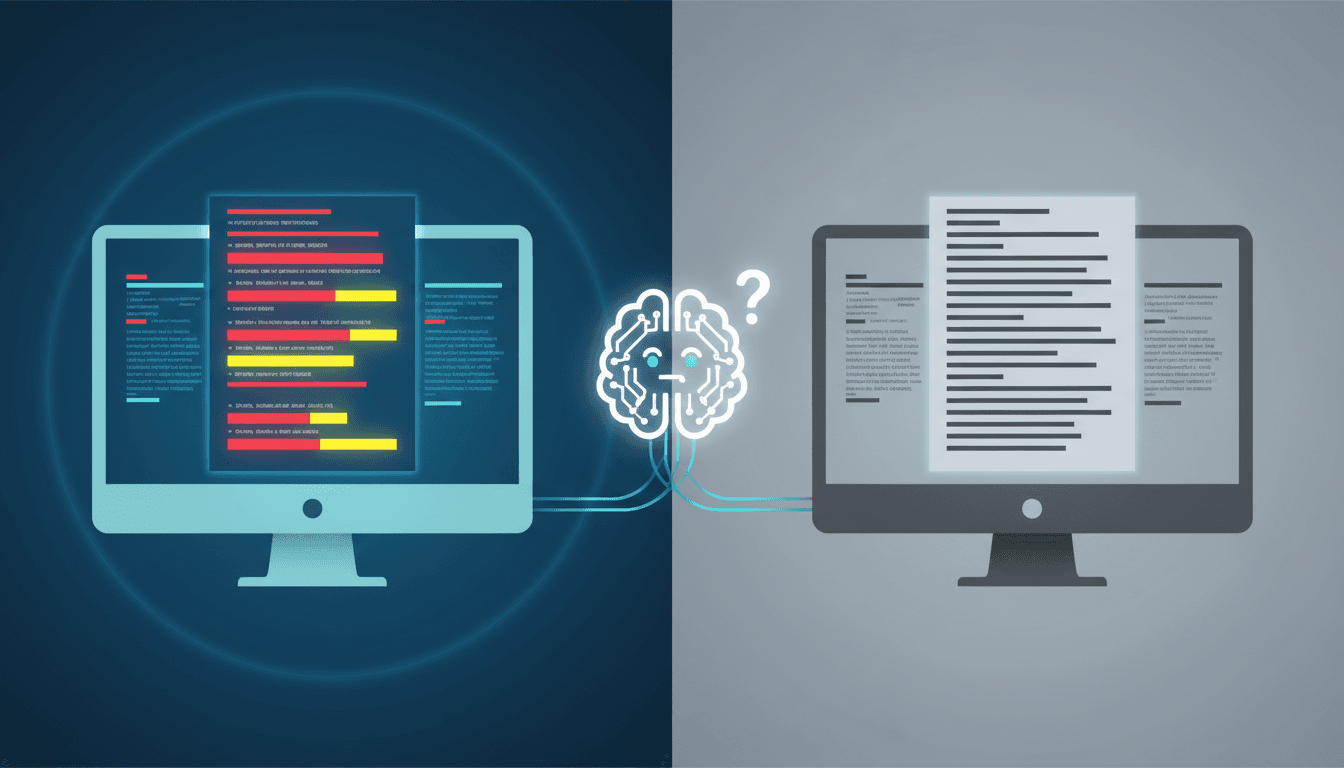

Your Malware Detectors Are Being Fooled. Here's How to Fight Back.
Your company's security scanners are getting tricked. They might pass all the standard tests, but in the real world, hackers are smarter. They don't just run simple attacks—they learn and adapt, finding the tiny cracks in your AI defenses.
What if you could use the same advanced, learning-based attacks to train your own systems? To make them so tough that they can withstand not just yesterday's threats, but tomorrow's?
New research shows exactly how to do that.
What Researchers Discovered
Security researchers built an AI system named Replicant. Its job was simple: learn how to modify malicious software so it slips past security scanners.
Think of it like a master forger. Instead of crafting a fake passport for each specific country's border guard, this forger learns a universal set of tricks that works on many different guards. Replicant learned a general strategy for evasion that worked against many different security scanners, even ones it had never seen before.
This is a big problem. It means a single, automated attack tool could bypass a wide array of your company's security products.
But here's the powerful flip side: You can use this AI-generated attack to train your own security AI. This process is called adversarial training.
It's like using a world-class sparring partner to train a boxer. Getting beaten by the best teaches the boxer to defend against a wider variety of punches. In the digital world, this creates a much tougher detector that is harder for both old and new AI attacks to fool. It provides a concrete method to "vaccinate" your security systems.
The research also revealed a critical warning: This robustness can fade. If hackers invent new ways to modify malware that your system hasn't seen—like an enemy developing cannons after you've built a wall against catapults—your protection becomes outdated. Security hardening is not a one-time fix.
You can read the full paper here: REPLICANT: Learning Policies for Evading and Hardening Malware Detectors.
How to Apply This Today
This isn't just theory. You can use the Replicant framework right now to build more resilient defenses. Here are four concrete steps to start this week.
Step 1: Stress-Test Your Current Detectors
Don't just run standard malware samples against your scanners. Use a tool like Replicant (the framework is available from the research team) to generate adversarial examples—malware that has been intelligently modified to evade detection.
For example: Take a known malware sample your scanner catches. Use the adversarial AI to make small, smart code changes. Then, feed this new version back into your scanner. Does it still get flagged? If not, you've found a blind spot.
Action: Schedule a "red team" exercise this quarter where your security team uses adversarial attack tools to probe your primary malware detector. Document every successful evasion.
Step 2: Implement Adversarial Training in Your Pipeline
Once you've found weaknesses, don't just patch them. Use the evasive samples to make your detector stronger. This is the core of adversarial training.
- Collect your evasive malware samples from Step 1.
- Re-train your AI detector, but include these "hard" examples in the training data. Label them clearly as malicious.
- Your model will learn to recognize both the original malware and its sneaky variants.
For example: If your detector uses a machine learning model (like a neural network), you would add the adversarial examples to your training dataset and run a new training cycle. This process is computationally heavy, so plan for it. A mid-sized security team could run this process monthly.
Step 3: Automate the Feedback Loop
Manually generating attacks and re-training is slow. Build a more automated pipeline.
- Tool Integration: Use scripts to periodically generate new adversarial examples using the latest attack methods (like Replicant's learned policies).
- Continuous Training: Integrate these new examples into a continuous training pipeline for your detector model. Cloud-based machine learning platforms (like AWS SageMaker or Google Vertex AI) can help automate this.
- Metrics: Track your detector's "adversarial robustness" as a key performance indicator. Measure the percentage of adversarial samples it catches over time. Aim to keep this number above 95%.
Step 4: Plan for "Capability Drift"
Remember, attackers evolve. Your adversarial training is only as good as the threats it sees.
- Threat Intelligence Feed: Subscribe to feeds that detail new malware obfuscation techniques and "gadgets" (benign code snippets hackers use to hide their work).
- Update Your Attack Library: Use this intelligence to update the toolbox your adversarial AI uses to create test samples. If you only train against yesterday's tricks, you won't catch tomorrow's attacks.
- Schedule: Review and update your attack "capability set" at least every six months.
What to Watch Out For
This approach is powerful, but it has limits. Be aware of these three points.
- It's Not a Silver Bullet: The research confirms that if hackers invent completely new modification methods, your hardened detector's advantage shrinks. This is an arms race, not a finish line.
- It's Resource-Intensive: Generating high-quality adversarial examples and re-training models requires significant computing power and time. Budget for this.
- It Starts with Known Malware: The current method assumes the attacker has a set of "gadgets" to work with. It doesn't explore creating entirely new malicious code from scratch. Your defenses still need to cover the basics.
Your Next Move
Don't wait for a breach to prove your detectors are vulnerable.
Start by running a single adversarial test. This week, take one critical malware detector in your stack. Find one known malicious file it detects. Use an open-source adversarial attack tool (look for frameworks based on this research) to modify that file. See if it still gets caught.
That one test will show you the gap between your lab results and real-world risk. From there, you can build a plan to close it.
Question for your team: How many of our security AI models are tested against adaptive, learning-based attacks versus just static malware databases?
Share your answer in the comments.
Comments
Loading...