Your Influencer Marketing Is Breaking the Law (Here's How to Fix It)
You spend thousands on influencer partnerships. You track clicks and conversions. But did you know your campaigns might be breaking federal law right now?
Most companies assume their influencer partners follow disclosure rules. New research shows that assumption is dangerously wrong.
The Problem You Recognize
You risk six-figure FTC fines and permanent brand damage when influencers don't disclose paid promotions. Consumer trust evaporates. Your marketing budget turns into legal liability overnight.
What Researchers Discovered
Researchers analyzed over 3 million YouTube videos to track affiliate marketing compliance. Their findings, published in Turning Trust to Transactions: Tracking Affiliate Marketing and FTC Compliance in YouTube's Influencer Economy, reveal a compliance crisis.
Finding 1: Hidden Payments Are Everywhere
Affiliate links appear in 7.35% of YouTube videos. That's common. What's shocking? 69% of those videos don't properly disclose the financial relationship.
Think of it like a friend recommending a restaurant without telling you they get a free meal for every customer they bring. You think it's honest advice. It's actually a paid ad.
Finding 2: Manual Disclosures Fail
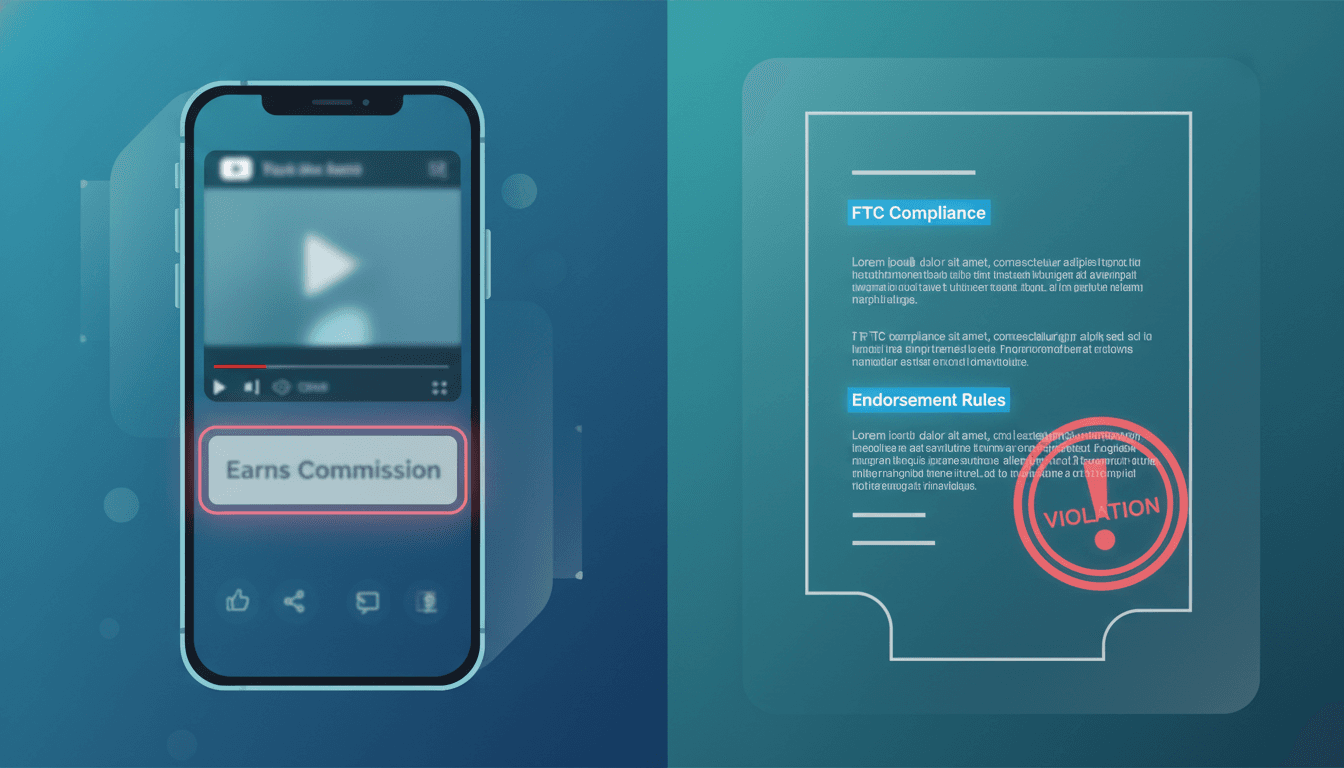
When creators manually add disclosures in video descriptions, they fail most of the time. But when YouTube's built-in shopping tool automatically tags links with "Earns commission," compliance jumps to 98.8%.
Think of seatbelt reminders in cars. When the car automatically reminds you, everyone buckles up. When it's just a manual sticker, people forget.
Finding 3: Bigger Channels = Bigger Risk
Channels with over 1 million subscribers use affiliate links most often. They also have the worst disclosure rates. Your biggest, most expensive influencers pose the highest compliance risk.
Finding 4: Rules Don't Work Without Tools
Disclosure rates barely improved after FTC guideline updates. Posting rules without enforcement tools is like posting speed limit signs without speed cameras. People ignore them.
How to Apply This Today
You can't wait for influencers to self-regulate. You need systems that enforce compliance automatically. Here are four steps to implement this week.
Step 1: Mandate Platform Tools in Contracts
Add one clause to every influencer agreement: "Creator must use platform-native disclosure tools (e.g., YouTube Shopping 'Earns commission' tag) for all affiliate links."
Why this works: Platform tools achieve 98.8% compliance. Manual methods fail. Make the easy choice the required choice.
For example: Your next contract with a tech reviewer should specify they must enable YouTube's shopping features for any product link. This takes them 30 seconds. It saves you potential FTC fines.
Step 2: Deploy Automated Monitoring
Use tools to scan influencer content for undisclosed links. Don't rely on manual checks.
Tools to consider:
- Brandwatch or Sprout Social for social listening
- HypeAuditor or Upfluence for influencer analytics
- Custom scripts using YouTube API (technical teams can build this in 2-3 weeks)
Implementation timeline:
- Week 1: Audit current top 20 influencers for compliance
- Week 2: Set up monthly automated reports
- Week 3: Create escalation process for violations
Step 3: Create Simple Disclosure Templates
Give influencers exactly what to say and where to say it. Complexity causes failure.
Effective template: "Disclosure: I earn a commission if you purchase through my links. This doesn't affect your price."
Placement rules:
- First line of video description
- Spoken in first 30 seconds of video
- On-screen text for first 10 seconds of mention
For example: Send your template with campaign briefs. Include it in your content approval checklist. Make compliance part of your workflow, not an afterthought.
Step 4: Prioritize High-Risk Audits
Focus compliance efforts where risk is highest: your biggest influencers.
Action plan:
- List all influencers with over 100,000 followers
- Audit their last 10 videos for proper disclosures
- For violations: first offense = warning and education, second offense = contract termination
Time investment: 2 hours per month for a marketing manager. Compare that to the $50,000+ FTC fine for a single violation.
What to Watch Out For
Limitation 1: Audio disclosures aren't tracked. The study only analyzed text in descriptions. Some creators might disclose verbally in videos. Your monitoring should include spot-checking video content, not just descriptions.
Limitation 2: Enforcement gaps remain. Even with tools, some influencers will try to bypass systems. You need consistent follow-up. Schedule quarterly compliance reviews with your legal team.
Risk: Over-reliance on automation. Tools help but don't replace human oversight. Designate one team member as compliance officer for influencer partnerships. Give them authority to pause campaigns for violations.
Your Next Move
Start by auditing your top three influencers this week.
- Go to their YouTube channels
- Check their last five videos
- Look for "Earns commission" tags or clear disclosures
- Document any violations
This 15-minute exercise shows your actual risk level. Most companies discover at least one undisclosed link in their first audit.
Question to discuss with your team: If 69% of affiliate promotions lack proper disclosure, how many of your campaigns are putting your brand at risk right now?
Share your audit findings in the comments. How many violations did you find in your first 15 minutes?
Comments
Loading...