
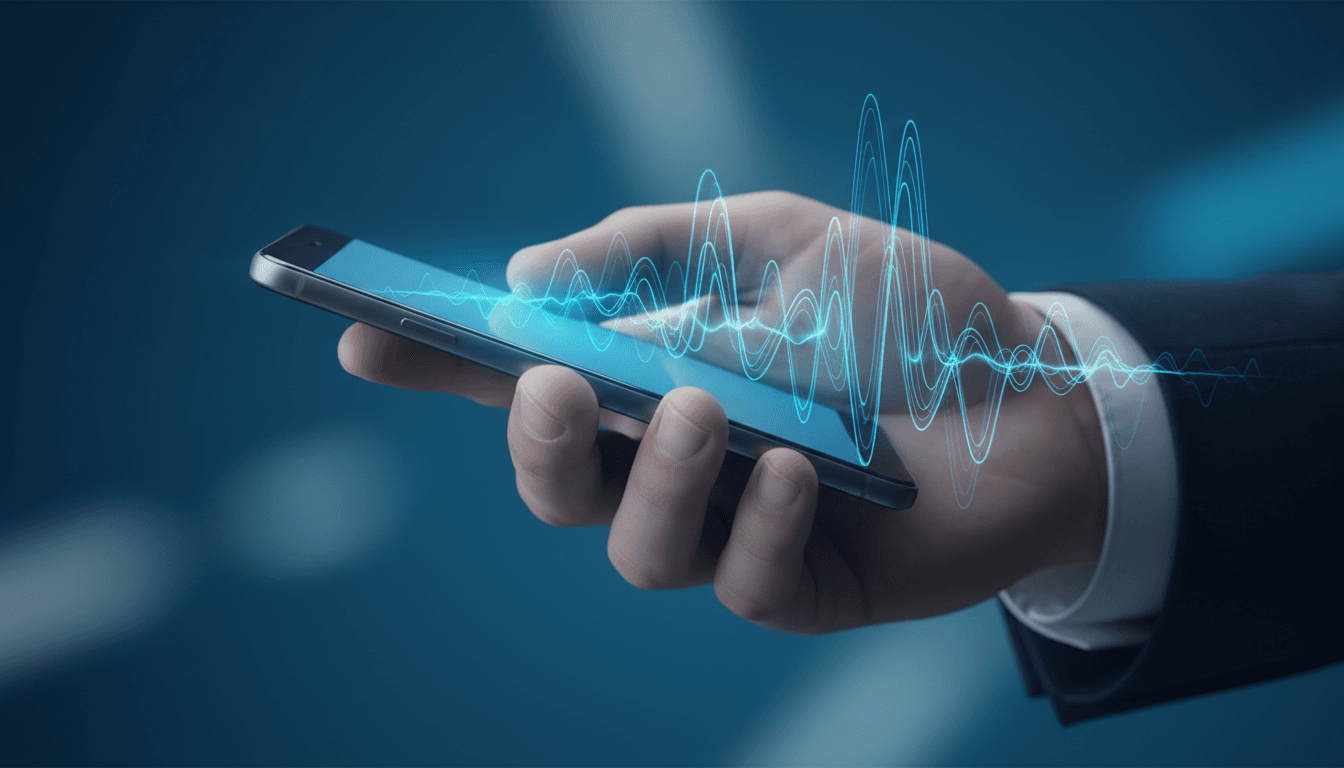
Stop AI Fraud With the Shake in Your Hand
The Problem You Recognize Bots are winning. AI-generated deepfakes trick video verification. Automated scripts take over accounts and steal money.
You add more security steps for your users. They get frustrated and leave. It’s a losing battle.
What Researchers Discovered A team found a new way to prove a human is present. It uses the tiny, involuntary muscle twitches in your hand. These tremors create a unique ‘fingerprint’ in your phone’s motion sensors.
Think of it like a live musician playing a violin. There’s a natural, imperfect vibrato in the sound. A perfect digital recording or a robot can’t fake that organic ‘shake’.
This signal comes directly from your brain’s control of your muscles. Current AI or robots cannot perfectly replicate it. The researchers built a system called A-Live to detect it.
You can read their full paper here: A-Live: Passive Liveness Detection via Neuromuscular Micro-Motion Signatures on Commodity Sensors.
Their system achieved over 99.5% accuracy. It worked across 101 different smartphone and tablet models. This means it can work at scale on the devices people already own.
Most importantly, it’s fully passive. It requires no user interaction. No blinking, smiling, or moving the phone in a pattern. The security check happens silently in the background.
How to Apply This Today The core idea is ready. You can start building a strategy now. Here are five specific steps to implement this approach.
1. Audit Your High-Risk Touchpoints First, identify where you need liveness detection the most. Look for actions where proving a human is present stops fraud.
- Financial Transactions: Money transfers, login to banking apps, changing account details.
- Account Integrity: Password resets, new device registrations, recovery flows.
- Content Moderation: Posting high-visibility content, sending bulk messages.
- Gated Access: Entering admin panels, accessing sensitive customer data.
For example: A fintech app’s biggest fraud vector is account takeover via automated scripts. They should focus their liveness check on the login and money transfer screens.
2. Prototype with Sensor Data Collection You need to start gathering the right data. Use your existing mobile app to collect motion sensor readings during key user actions.
- Tools: Use the device motion APIs in iOS (Core Motion) and Android (SensorManager).
- Data Points: Capture accelerometer and gyroscope data at a high frequency (100Hz+).
- Context: Tag the data with the action being performed (e.g., ‘login_attempt’, ‘transfer_confirmation’).
Effort: A senior mobile developer can build a simple data logging module in 2-3 days. Start with a small beta user group.
3. Build a Baseline ‘Human’ Signature You must understand what normal human micro-motion looks like in your app. Analyze the sensor data from your trusted beta users.
- Process: Extract features from the raw sensor stream. Look for patterns in the tiny, high-frequency tremors. The A-Live paper details specific signal processing techniques.
- Framework: Use a lightweight machine learning library like scikit-learn to create a baseline model. Your goal is to distinguish ‘likely human’ signal from ‘suspiciously smooth’ or robotic noise.
- Validation: Test this baseline against known bot traffic or simulated automated interactions.
4. Design a Silent Security Layer Integrate the check without disrupting the user. The power of this method is its passivity.
- Flow: Trigger sensor data collection in the background when a user enters a high-risk screen. Process it locally on the device or send a compact feature vector to your server.
- Action: If the system detects a non-human signature, do not block the user immediately. Instead, flag the session for review or trigger a secondary, more visible verification step (like a one-time passcode).
- User Experience: Never show a message saying “verifying your hand tremor.” The process should be invisible.
For example: During a checkout, the app silently verifies liveness. If it fails, the system adds a reCAPTCHA challenge. Real users proceed seamlessly; bots hit a wall.
5. Pilot and Measure Impact Start small and measure concrete results. Choose one high-risk flow for a controlled pilot.
- Metrics: Track fraud attempt rates before and after. Measure user completion rates for the protected flow to ensure you’re not adding friction.
- Benchmark: Aim to match the research. Can you achieve 95%+ accuracy in distinguishing suspicious sessions?
- Iterate: Use the pilot data to refine your model and integration points.
What to Watch Out For This approach is powerful, but not a magic bullet. Be aware of its limits.
- It needs motion. The phone must be in hand and moving slightly. It cannot verify liveness if the device is sitting completely still on a table. Design your triggers accordingly.
- Long-term stability is unknown. Research hasn’t confirmed if a person’s micro-motion signature changes over years or due to medical conditions. Your system may need periodic re-calibration.
- Real-world noise is a challenge. The study was in controlled settings. Performance in extreme environments—like on a bumpy train—needs more validation. Your data collection must account for this.
Your Next Move Start by auditing just one critical user journey this week. Identify the single point where a bot check would save you the most money or prevent the most abuse.
Then, task a developer to spend one day exploring the motion sensor APIs for your app platform. See how easily you can start logging that data in the background.
The arms race against AI fraud requires new, hardware-based signals. The tremor in a user’s hand is a free sensor you already have access to. Will you be the first in your sector to use it?
Where in your application would a silent, passive human check provide the most immediate value?
Comments
Loading...